

AMD Stock in May: Is the AI Rally Still Worth Chasing?


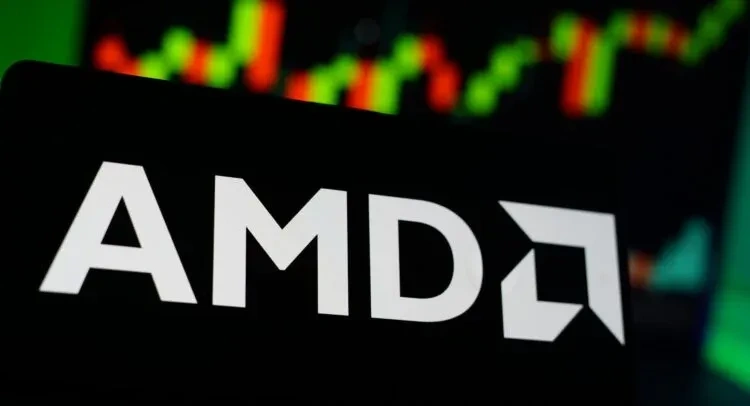
AMD stock is one of May’s hottest AI chip trades. After a sharp rally and strong Q1 2026 earnings, investors are asking a harder question: is AMD still a buy, or has the good news already been priced in?

The answer depends on how much confidence you have in AMD’s AI data center growth. The business is improving quickly, but the stock now carries high expectations. That makes May a key moment for anyone watching AMD stock, especially after the company reported $10.3 billion in Q1 2026 revenue and 43% year-over-year growth in non-GAAP diluted EPS.
AMD Stock in May: The Fast Snapshot
| Key Point | What It Means |
|---|---|
| Ticker | AMD, listed on Nasdaq |
| Recent price | Around $355 in early May 2026 |
| Q1 2026 revenue | $10.3 billion |
| Q1 2026 non-GAAP EPS | $1.37 |
| Main growth engine | AI infrastructure and data center demand |
| Investor concern | Valuation may already reflect a lot of optimism |
| Best use of this article | Understand the earnings story, forecast debate, and major risks |
AMD stock is no longer trading like a simple PC or gaming chip company. The market is increasingly treating Advanced Micro Devices as an AI infrastructure stock. That shift explains why the share price has moved so aggressively, but it also explains why the margin for error is thinner.
Why AMD Stock Is Getting So Much Attention in May
The core reason is simple: AI demand is changing AMD’s growth profile.
AMD’s May 5, 2026 earnings release showed Q1 revenue of $10.3 billion, up 38% from the same quarter last year. Non-GAAP diluted EPS reached $1.37, up 43% year over year. Management pointed to strong demand for data center CPUs and AI accelerators, with data center becoming the main driver of revenue and earnings growth.
That is exactly what investors wanted to see. The market is looking for proof that AMD can become a serious long-term AI beneficiary alongside Nvidia, not just a secondary chip supplier with occasional momentum.
But this is where the trade gets tricky. A strong company and a good stock entry are not always the same thing. AMD’s AI story is stronger than it was a year ago, yet the stock price also reflects far more optimism.
AMD Earnings: What Actually Matters
The headline numbers were strong, but the most important signal is the quality of growth.
AMD’s data center business matters more than almost anything else right now. Investors want to know whether AI accelerator shipments, EPYC server CPU demand, and large customer deployments can keep expanding without crushing margins or forcing expenses too high.
| Earnings Factor | Bullish Reading | Risk to Watch |
|---|---|---|
| Revenue growth | AI demand is converting into real sales | Growth may need to stay very high to justify valuation |
| EPS growth | Operating leverage is improving | R&D and supply costs can pressure future margins |
| Data center strength | AMD is becoming more important in AI infrastructure | Nvidia remains the dominant AI accelerator player |
| Customer demand | Large-scale deployments improve visibility | Big customers can create concentration risk |
| Guidance | Strong outlook can support further upside | Even good guidance may disappoint if expectations are too high |
The practical takeaway: AMD stock may move less on whether the quarter was good and more on whether investors believe the next few quarters can be even better.
AMD Stock Forecast: Bull Case vs Bear Case
The bull case for AMD stock is clear. If AI infrastructure spending keeps expanding, AMD has room to grow in server CPUs, AI accelerators, and rack-scale systems. Customers also have a strategic reason to diversify beyond one dominant AI chip supplier.
The bear case is also clear. AMD stock has already rallied hard. Some analyst target averages sit below the recent market price, which suggests the stock may have run ahead of published forecasts. If revenue growth slows, margins disappoint, or AI orders are delayed, the stock could reprice quickly.
| Scenario | What Could Happen |
|---|---|
| Bull case | AMD keeps winning AI infrastructure demand, EPS estimates rise, and the stock holds a premium valuation |
| Base case | Business momentum stays strong, but the stock consolidates as valuation catches up with earnings |
| Bear case | AI expectations cool, margins tighten, or guidance disappoints, causing a sharp pullback |
The more useful question is not “Will AMD go up?” It is “What has to go right for AMD stock to keep going up from here?” In May, the answer is: strong AI execution, improving visibility, and higher confidence in future earnings power.
Should Investors Chase AMD Stock After the Rally?
Chasing AMD stock after a major move is risky unless you have a clear time horizon.
Long-term investors may focus on AMD’s AI infrastructure opportunity and market share potential. If AMD can keep expanding data center revenue over several years, today’s valuation may look more reasonable in hindsight.
Short-term traders face a different problem. A stock can have excellent fundamentals and still fall if the market expected perfection. AMD is especially sensitive to earnings commentary, analyst revisions, Nvidia comparisons, and broader AI risk appetite.
That is the part many traders miss. The danger is not simply that AMD is “bad” or “good.” The danger is paying a price that assumes too much goes right too quickly.
For readers who also trade crypto volatility, the same principle applies. Leverage can magnify both correct and incorrect views. Before using leverage in any volatile market, review how spot and futures trading on WEEX differ, especially around liquidation and margin risk.
Key Risks for AMD Stock in May
AMD stock has several risks that investors should not ignore.
First, valuation risk is high. The stock’s rally means future growth must keep validating the price.
Second, competition remains intense. Nvidia still dominates AI accelerators, while Intel, custom chips, and other semiconductor players are fighting for pieces of the same market.
Third, AI spending can be lumpy. Hyperscaler order timing, supply constraints, and infrastructure budgets can shift from quarter to quarter.
Fourth, execution risk matters. AI systems are complex, and scaling supply while protecting margins is not easy.
Finally, market risk can override company performance. If investors rotate out of AI growth stocks, AMD stock can fall even if the business remains healthy.
Bottom Line: AMD Stock in May Is a Quality Story at a Demanding Price
AMD stock deserves attention in May because the company’s AI growth story is becoming more credible. Q1 2026 earnings showed strong revenue, higher EPS, and clear momentum in data center demand.
But the stock is not a low-expectation setup anymore. The market already understands the AI opportunity. That means the next move depends on whether AMD can keep raising confidence faster than the valuation rises.
For investors, AMD stock is a watchlist name with real long-term potential and meaningful short-term risk. For traders, position sizing matters more than excitement. Momentum can create opportunity, but it can also punish late entries.
If you trade high-volatility markets beyond stocks, WEEX’s crypto futures trading guide offers a useful breakdown of leverage, margin, and liquidation mechanics before taking directional exposure.
FAQ
Is AMD stock a buy in May 2026?
AMD stock may appeal to investors who believe AI data center growth will continue, but the valuation is demanding. It is better viewed as a high-expectation growth stock than a cheap entry.
Why did AMD stock rise?
AMD stock rose because investors expect stronger AI infrastructure demand, data center growth, and higher long-term earnings power from CPUs and AI accelerators.
What were AMD’s Q1 2026 earnings?
AMD reported Q1 2026 revenue of $10.3 billion and non-GAAP diluted EPS of $1.37 on May 5, 2026.
What is the biggest risk for AMD stock?
The biggest risk is valuation. AMD may need continued AI growth, strong margins, and positive guidance to justify its recent rally.
Is AMD stock related to crypto?
AMD is not a crypto stock. It is a semiconductor company. However, both AMD and crypto markets can be affected by risk appetite, technology cycles, and speculative capital flows.
You may also like

RogueAI (ROGUEAI) Price Prediction & Forecasts for May 2026: Volume Surges 219% – Can It Maintain the Momentum?
As of May 6, 2026, the current price of RogueAI (ROGUEAI) stands at $0.045, with a 24-hour high…
MEGR Token Price Prediction & Forecasts for May 2026: Overbought Signals Point to Potential Pullback
MEGR Token has been turning heads in the crypto space after a massive “god candle” rally that spiked…

冲鸭 (冲鸭) Price Prediction & Forecasts for May 2026: Could It Surge Amid Super App Ambitions?
As of May 6, 2026, the current price of 冲鸭 (冲鸭) stands at $0.85, with a 24-hour high…

Mirror (MIRRORBASE) Price Prediction & Forecasts for May 2026: Could the Mirror Revolution Spark a 50% Surge?
As of May 6, 2026, the current price of Mirror (MIRRORBASE) stands at $0.85, according to data from…
PEPE vs BONK: Which Meme Coin Is Leading?
There’s no clear winner—each leads in different ways. PEPE benefits from deeper liquidity and stronger market momentum, while BONK gains from ecosystem integration and community-driven growth.
If capital and trading activity dominate, PEPE leads. If narrative and adoption drive the cycle, BONK has the edge.

ARB vs OP : Which Layer 2 Will Dominate in 2026?
There likely won’t be a single winner by 2026. ARB leads in liquidity and DeFi depth, while OP focuses on ecosystem expansion through its Superchain strategy.
If the market favors capital efficiency, ARB has the edge. If network growth and narrative dominate, OP could pull ahead.
Solana vs Ethereum: High-Speed Blockchain or Ecosystem Giant?
Solana is a fast, low-fee blockchain focused on performance, while Ethereum is a leading smart contract ecosystem focused on security, decentralization, and long-term network effects.

ROAF vs ROAR: Which Has More Potential in 2026?
ROAF vs ROAR breakdown. One is narrative-driven. The other claims asset structure. Neither is backed by real oil. Read this before you buy.
DOGE vs SHIB: The Meme Coin Battle Between Stability and Explosive Growth
Dogecoin (DOGE) and Shiba Inu (SHIB) represent two different paths in the meme coin sector.
DOGE is the original meme coin, valued for its strong liquidity, long market history, and stable position across multiple crypto cycles. It behaves more like a sentiment-driven, large-cap asset with relatively smoother price movements.
SHIB, on the other hand, is a newer, ecosystem-focused token built on Ethereum, expanding through initiatives like Shibarium and DeFi products. Its price action is more volatile and heavily driven by narrative and ecosystem developments.
In simple terms:
DOGE = stability, liquidity, and mature meme assetSHIB = higher risk, higher volatility, and ecosystem growth potentialOverall, DOGE is typically preferred for more stable trading exposure, while SHIB attracts traders seeking aggressive, high-risk opportunities tied to narrative momentum.

MIRROR USDT Premiere on WEEX: Mirror (MIRROR) Listing
WEEX Exchange is thrilled to announce the exclusive premiere listing of Mirror (MIRROR) Coin, marking the world’s first…

NOT Token Price: Is Notcoin Cheap or Still Risky?
Track the NOT token price, Notcoin market cap, supply, chart risks, TON ecosystem catalysts, and whether NOT can recover.

Sandisk Stock: Why SNDK Is Surging and What Investors Should Watch
Sandisk stock has soared on AI storage demand, NAND pricing, and strong earnings. Here is what SNDK investors should watch next
Can Global Overwatch Protocol (GOP) Coin Reach $1? Full Guide 2026
Can GOP realistically hit $1?
What Is Middle Eastern Gas Reserve (MEGR) Coin?
Is MEGR crypto really backed by 1.42 Tcm gas? We break down MEGR tokenomics, roadmap risks, and how to verify claims before buying. No fluff.
Introducing Circle Internet Group Tokenized Stock (Ondo) ($CRCLon): Onchain Circle Exposure and Price Prediction
CRCLon is Ondo's tokenized Circle stock wrapper, drawing attention with onchain equity access, fast narrative rotation, and direct exposure to the CRCL story.
Introducing Billions Network ($BILL): Human and AI Verification Infrastructure and Price Prediction
Billions Network is a human-and-AI trust layer drawing attention after its token launch, live exchange trading, and utility-driven identity narrative.

BILL Crypto Airdrop: Unlock 30,000 USDT Rewards and Zero-Fee Trading
Billions Network’s BILL token is making waves in the crypto space with its latest airdrop event, offering participants…
Is Billions Network (BILL) a Good Investment in May 2026?
Billions Network (BILL) has caught the eye of many crypto investors this May 2026, with its recent price…
RogueAI (ROGUEAI) Price Prediction & Forecasts for May 2026: Volume Surges 219% – Can It Maintain the Momentum?
As of May 6, 2026, the current price of RogueAI (ROGUEAI) stands at $0.045, with a 24-hour high…
MEGR Token Price Prediction & Forecasts for May 2026: Overbought Signals Point to Potential Pullback
MEGR Token has been turning heads in the crypto space after a massive “god candle” rally that spiked…
冲鸭 (冲鸭) Price Prediction & Forecasts for May 2026: Could It Surge Amid Super App Ambitions?
As of May 6, 2026, the current price of 冲鸭 (冲鸭) stands at $0.85, with a 24-hour high…
Mirror (MIRRORBASE) Price Prediction & Forecasts for May 2026: Could the Mirror Revolution Spark a 50% Surge?
As of May 6, 2026, the current price of Mirror (MIRRORBASE) stands at $0.85, according to data from…
PEPE vs BONK: Which Meme Coin Is Leading?
There’s no clear winner—each leads in different ways. PEPE benefits from deeper liquidity and stronger market momentum, while BONK gains from ecosystem integration and community-driven growth.
If capital and trading activity dominate, PEPE leads. If narrative and adoption drive the cycle, BONK has the edge.
ARB vs OP : Which Layer 2 Will Dominate in 2026?
There likely won’t be a single winner by 2026. ARB leads in liquidity and DeFi depth, while OP focuses on ecosystem expansion through its Superchain strategy.
If the market favors capital efficiency, ARB has the edge. If network growth and narrative dominate, OP could pull ahead.


