

Tether.wallet: What It Is, How It Works, and How to Use It Safely

If you searched for Tether.wallet, the short answer is simple: it is Tether’s official self-custodial wallet for holding and moving USDT, USAT, XAUT, and Bitcoin. The product matters because it is built to reduce the friction that keeps normal users from using digital dollars, while still leaving key control on the user side.
That is the upside. The harder truth is that a self-custodial wallet only helps if you use it correctly. In practice, most losses do not come from the wallet brand itself. They come from seed phrase theft, network mismatch, fake token deposits, and users treating self-custody like a reversible banking app when it is not.
What Is Tether.wallet?
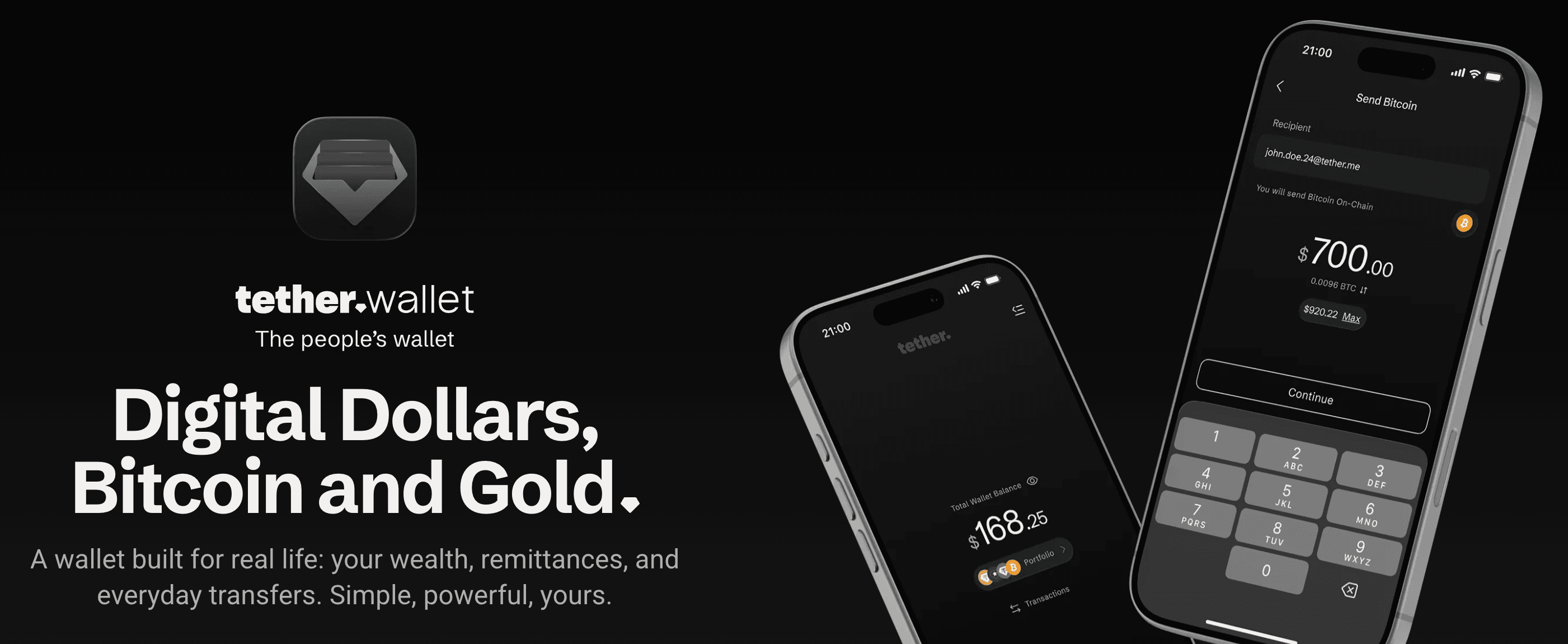
Tether.wallet is Tether’s official wallet product, launched on April 14, 2026, as a self-custodial app built on Tether’s Wallet Development Kit. It is meant for people who want direct access to Tether’s assets without relying on a centralized exchange account to hold funds.
The key point is custody. Tether says wallet creation happens on the user’s device, transactions are signed locally, and Tether cannot access or move the funds. That makes Tether.wallet different from an exchange balance. You get control, but you also take responsibility.
For beginners, that tradeoff is the whole story. If you want something that feels like online banking, self-custody may feel harsh. If you want direct control over your assets, tether.wallet is much closer to the right model.
Why Tether.wallet Matters for USDT Users
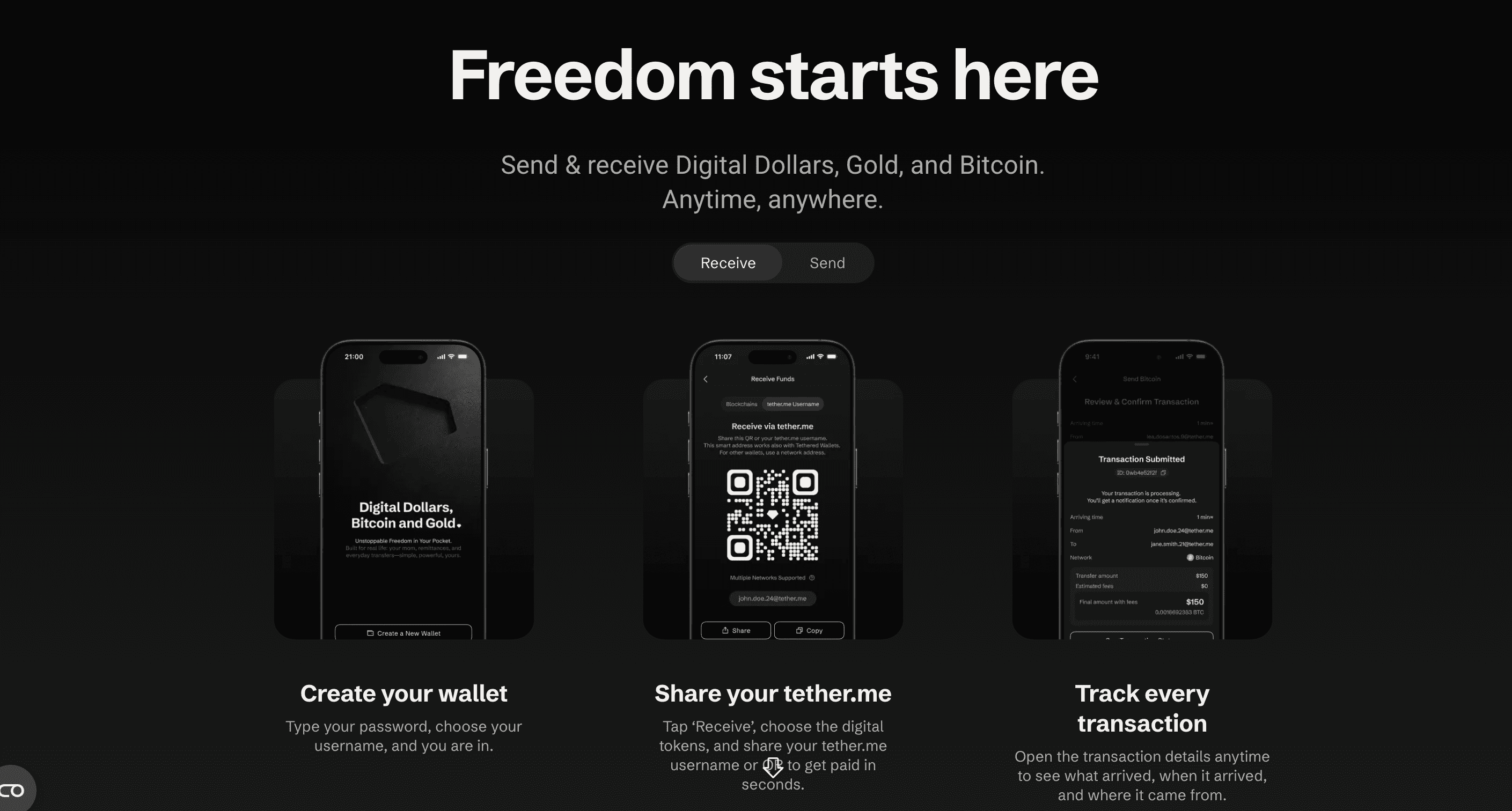
The main value of Tether.wallet is not that it invents a new asset. The value is that it simplifies how people use digital dollars. Tether says the wallet supports human-readable usernames through Tether.me, lets users send funds without typing long wallet strings every time, and allows transaction fees to be paid in the asset being transferred instead of forcing users to hold a separate gas token for every action.
That matters because stablecoin adoption usually breaks on small frictions. People understand dollars. They do not always understand gas, bridges, address formats, or why one USDT transfer costs more than another. Tether.wallet is trying to hide some of that complexity without taking custody away from the user.
If you are still comparing rails before choosing a wallet, it helps to review how WEEX handles deposits across different chains first. The better wallet choice often depends less on branding and more on whether you need cheap transfers, DeFi access, or Bitcoin-native settlement.
How Tether.wallet Works in Practice
In day-to-day use, Tether.wallet is built around three practical ideas:
You hold the keys.
You can recover the wallet with a 12-word recovery phrase.
You can also use encrypted cloud backup if you want easier restoration on a new device.
According to Tether’s wallet documentation, the app can store encrypted wallet data on Tether servers while the encryption key stays in the user’s personal cloud account, such as iCloud or Google Drive. The practical takeaway is that no single part is enough on its own. Recovery happens on your device.
That setup is cleaner than many people expect, but it does not remove the basics of self-custody. If someone gets your recovery phrase, your funds are at risk. If you type that phrase into a fake website, no support team can reverse the damage. Before moving real money, read WEEX’s security alert on phishing websites and scams.
The sending flow is also more user-friendly than a standard raw-address wallet. Tether says users can receive assets either through a Tether.me username or through a normal blockchain address, depending on what the sender supports. That is a real usability upgrade, especially for users who are more likely to make copy-paste errors than smart-contract errors.
Supported Assets, Networks, and How to Prevent Costly Mistakes
At launch, Tether said Tether.wallet supports:
USDT on Ethereum, Polygon, Plasma, and Arbitrum
XAUT on Ethereum, Polygon, Plasma, and Arbitrum
USAT on Ethereum
Bitcoin on-chain and via the Lightning Network
This is where users need to slow down. The most common stablecoin mistake is not picking the wrong wallet. It is picking the wrong network. If you send USDT on one network to a platform or wallet expecting another, recovery may be difficult or impossible.
The second common mistake is assuming every token called USDT is real. Wallet interfaces can show lookalike assets. The safer habit is to verify the network and token details before you move size. If you are funding from an exchange, it also helps to review how to buy USDT with USD on WEEX OTC before the first transfer.
In practice, the right network depends on the job:
Ethereum usually makes more sense for deeper DeFi compatibility.
Lower-cost networks make more sense for routine transfers.
Bitcoin and Lightning make more sense when the payment flow is Bitcoin-native.
The more important point is consistency. Send, receive, and withdraw on the same network unless you deliberately bridge or convert.
Is Tether.wallet Safe?
Tether.wallet can be a safe product for the right user, but only if you define safety correctly. The wallet is self-custodial, which means Tether is not supposed to be able to move your funds. That reduces one category of platform risk. It does not remove user error.
From a security perspective, the biggest strengths are local signing, user-controlled recovery, and a simpler transfer flow through usernames and asset-denominated fees. The biggest weaknesses are also the usual self-custody weaknesses: phishing, bad backup habits, device compromise, and irreversible transfers.
Real security comes from process discipline:
Keep the recovery phrase offline.
Never enter it on a website.
Verify the network before every deposit.
Test with a small transfer first when using a new route.
Avoid storing large long-term balances on a phone if cold storage would fit better.
That last point matters more than marketing. Tether.wallet is useful, but it is not automatically the best place for every dollar you own. For active payments and moderate balances, it can make sense. For large long-term holdings, many users will still prefer hardware wallet workflows.
Who Should Use Tether.wallet and Who Should Not
Tether.wallet makes the most sense for users who want direct exposure to Tether’s asset set, want a simpler self-custody experience, and are comfortable following wallet-security rules. It is especially reasonable for users who move USDT often enough to care about convenience but do not want to leave funds sitting on an exchange indefinitely.
It makes less sense for people who do not want to manage backups, do not understand network selection, or expect support to reverse mistakes. Self-custody is empowering, but it is not forgiving.
The bottom line is straightforward: Tether.wallet is a credible option if you want an official Tether-built wallet and understand the responsibilities that come with it. The wallet removes some friction. It does not remove the need for judgment. The real question is not whether the app looks simple. The real question is whether your habits are strong enough for self-custody. If you are going to use Tether.wallet, the smartest move is to set up backup correctly, choose one network deliberately, and test every flow before moving size.
FAQ
Is Tether.wallet the official Tether wallet?
Yes. Tether announced Tether.wallet as its official self-custodial wallet on April 14, 2026.
What can I store in Tether.wallet?
At launch, Tether said the wallet supports USDT, USAT, XAUT, and Bitcoin, with support depending on the specific network.
Does Tether.wallet let Tether control my funds?
Tether says no. The wallet is designed so keys stay under user control and transactions are signed locally on the device.
What is the biggest risk when using Tether.wallet?
The biggest practical risks are recovery phrase theft, phishing, and sending funds on the wrong network.
Is Tether.wallet better than keeping USDT on an exchange?
It depends on the user. Tether.wallet gives you self-custody and direct control, while exchanges give you convenience and account recovery but add counterparty risk.
You may also like
What is Make A Wish (WISH) Coin: Everything You Need to Know
Make A Wish (WISH) Coin is a cryptocurrency designed to support charitable causes, drawing inspiration from the Make-A-Wish…
DOGE Airdrop: How to Share 30,000 USDT Rewards
Dogecoin enthusiasts are buzzing about the latest airdrop opportunities, especially those tied to trading platforms offering real USDT…
What is Make A Wish (WISH) Coin: Everything You Need to Know About This Charity-Driven Crypto
Make A Wish (WISH) is a cryptocurrency token designed to blend blockchain technology with charitable initiatives, allowing users…
RCSC vs DESO: Which SocialFi Project Is Real?
RCSC vs DESO: Which SocialFi project is real? Compare infrastructure, transparency, liquidity, and adoption. Learn the key differences and trade on WEEX.

Turn Futures Trading Fees Into WXT Rewards: WEEX Trade to Earn Series 5 Is Here
Join WEEX Trade to Earn Series 5 from May 1–31, 2026. Trade USDT-M futures, earn real-time WXT rebates, and upgrade your rebate rate up to 45%.
Futures Trading Bonus: Earn WXT with WEEX Trade to Earn
Join WEEX Trade to Earn from May 1-31, 2026. Trade USDT-M futures, complete tasks, and earn WXT rebates based on volume.

AI Token Price: How Much Do OpenAI, Claude, Gemini, and Other AI APIs Cost?
Compare AI token prices for OpenAI, Claude, Gemini, DeepSeek, Mistral, and Perplexity. Learn input/output costs, hidden fees, and budgeting tips.

GMAR Crypto Explained: What Is Global Military Arms Reserve?
Learn what GMAR crypto is, how the Solana token works, its defense-spending narrative, market data, buying steps, and key risks.

What Is American Reserve Modernization Act (ARMA) Coin?
Confused by American Reserve Modernization Act (ARMA) and ARMA coin? This breakdown separates the Bitcoin reserve proposal from the Ethereum meme token. Includes price, risks, and how to buy.
What Is Strategic Energy Supply (SES) Coin?
Looking for info on SES coin? This breakdown covers the Strategic Energy Supply token on Solana, its narrative-driven approach, risks, and whether SES crypto fits your trading style.
What Is Hormuz Toll Fund (HTF)? Full Crypto Breakdown
Looking for HTF Crypto insights? This breakdown covers the Hormuz Toll Fund, its Solana-based tokenomics, and the geopolitical narrative driving the HTF price.
Is QCOMon Coin a Good Investment in 2026?
Deciding whether QCOMon Coin represents a solid investment opportunity in 2026 requires looking at its unique position as…
Should You Invest in QCOMon Coin? Expert Guide & Analysis
QCOMon Coin represents a tokenized version of Qualcomm stock through the Ondo platform, offering crypto users exposure to…

Can I Invest in QCOMon Coin in 2026? Where and How to Buy
If you’re exploring tokenized assets in the crypto space, QCOMon coin stands out as a way to gain…
PROS Airdrop: Share 30,000 USDT Rewards
Pharos, the innovative Layer 1 blockchain for RealFi, is making waves with its PROS token, and right now,…
PROS Airdrop: Claim Your Share of 30,000 USDT Rewards
Crypto traders are always on the lookout for ways to boost their portfolios without huge upfront costs, and…
Introducing Pump.fun ($PUMP): Platform Overview and Price Prediction
Pump.fun is a token-launch platform driving community-led crypto activity, and $PUMP is gaining attention as traders track its momentum.
What is Arm Holdings plc Tokenized Stock (Ondo) (ARMON) Coin
Arm Holdings plc Tokenized Stock (Ondo), known by its ticker ARMON, represents a tokenized version of shares in…
What is Make A Wish (WISH) Coin: Everything You Need to Know
Make A Wish (WISH) Coin is a cryptocurrency designed to support charitable causes, drawing inspiration from the Make-A-Wish…
DOGE Airdrop: How to Share 30,000 USDT Rewards
Dogecoin enthusiasts are buzzing about the latest airdrop opportunities, especially those tied to trading platforms offering real USDT…
What is Make A Wish (WISH) Coin: Everything You Need to Know About This Charity-Driven Crypto
Make A Wish (WISH) is a cryptocurrency token designed to blend blockchain technology with charitable initiatives, allowing users…
RCSC vs DESO: Which SocialFi Project Is Real?
RCSC vs DESO: Which SocialFi project is real? Compare infrastructure, transparency, liquidity, and adoption. Learn the key differences and trade on WEEX.
Turn Futures Trading Fees Into WXT Rewards: WEEX Trade to Earn Series 5 Is Here
Join WEEX Trade to Earn Series 5 from May 1–31, 2026. Trade USDT-M futures, earn real-time WXT rebates, and upgrade your rebate rate up to 45%.
Futures Trading Bonus: Earn WXT with WEEX Trade to Earn
Join WEEX Trade to Earn from May 1-31, 2026. Trade USDT-M futures, complete tasks, and earn WXT rebates based on volume.


